In this episode of Karen Toffler's Research Renaissance, Daniel Geschwind explores how advances in scientific knowledge and technology in the study of Autism Spectrum Disorder.
In this episode of Karen Toffler's Research Renaissance, Daniel Geschwind explores how advances in scientific knowledge and technology could enhance the diagnosis and treatment of disease over the next decade.

This week on The Genetics Podcast, Patrick is joined by Daniel Geschwind, Professor, Senior Associate Dean, and Associate Vice Chancellor of Precision Health at UCLA. They discuss the circuitous career path that led Daniel to building a biobank that provided the foundation for autism genetics, the complexity of the molecular and genetic aspects of autism, and how gene therapies could advance treatment.

Dr. Geschwind, the Gordon and Virginia MacDonald Distinguished Professor of Human Genetics, Neurology and Psychiatry at UCLA, shares his profound insights on the intersection of neurogenetics with neuropsychiatric diseases and traumatic brain injuries.

Dr. Daniel Geschwind from UCLA provides an understanding of the brains of people with autism, focusing on those with a mutation in chromosome 15. He goes over how they are similar and different and answers questions from families about how this research is important for helping improve the lives of people across the spectrum.

In the late 1990s, after Daniel Geschwind had established himself as an expert on the genetics of neurological diseases, a personal connection abruptly pulled him into autism research. Since then, he has participated in dozens of studies probing the genetic basis of autism and related neuro-developmental disorders.

Dr. Geschwind explains risk factors, diagnostic processes, and what research is being done in the autism community.

The Office of the Vice Chancellor for Research & Creative Activities (ORCA) of the University of California, Los Angeles presents the 136th Faculty Research Lecture. Watch as Professor Daniel Geschwind discusses progress in understanding the causes of complex brain disorders, focusing on autism and related neuropsychiatric conditions.

Dr. Geschwind discusses current advancements, innovative applications and future directions in neurogenetics, providing a comprehensive understanding of its impact on precision health.

Seminar about human cognitive and behavioral variation given as part of the Center for Academic Research and Training in Anthropogeny (CARTA)'s annual symposium

Seminar given April 29, 2022 as part of the Center for Autism Research and Treatment (CART)'s annual symposium

Dan Geschwind, professor and associate vice chancellor at UCLA, shares his path to neuroscience, thoughts on precision medicine, and why one should use unbiased methods to prioritize hypotheses.

Workshop held September 22, 2020 by the National Institute of Health to stimulate discussions among experts to identify systematic experimental approaches to gain comprehensive insights into psychiatric disease mechanisms based on human genetic findings.

Seminar given April 20, 2018 as part of the Center for Autism Research and Treatment (CART)'s annual symposium, UCLA

Seminar given as part of the Center for Autism Research and Treatment (CART)'s annual symposium

Seminar given as part of the Center for Academic Research & Training in Anthropogeny (CARTA) Symposium at UC San Diego, May 5, 2017.

Daniel Geschwind, the Gordon and Virginia MacDonald Distinguished Professor of neurology, psychiatry and human genetics at the UCLA School of Medicine, gives a keynote address "Human cognition and genetic variation: Life on a continuum" during the 2017 Allen Frontiers Symposium.

Seminar given as part of UC Berkeley Genomics and the Brain symposium, 2015.

Seminar given as part of Center for Academic Research & Training in Anthropogeny (CARTA) Symposium at UC San Diego, October 5, 2012.

Seminar given July 29, 2016 as part of Computational Genomics Summer Institute 2016 at Institute for Pure and Applied Mathematics, UCLA

Daniel Geschwind discusses his group’s use of RNA sequencing, chromatin structure and gene networks to help develop an understanding of potential convergent mechanisms in autism spectrum disorders.

Neuron video abstract for paper by Rosen et al. 2011.

Cell video abstract for paper by Peñagarikano et al. 2011.

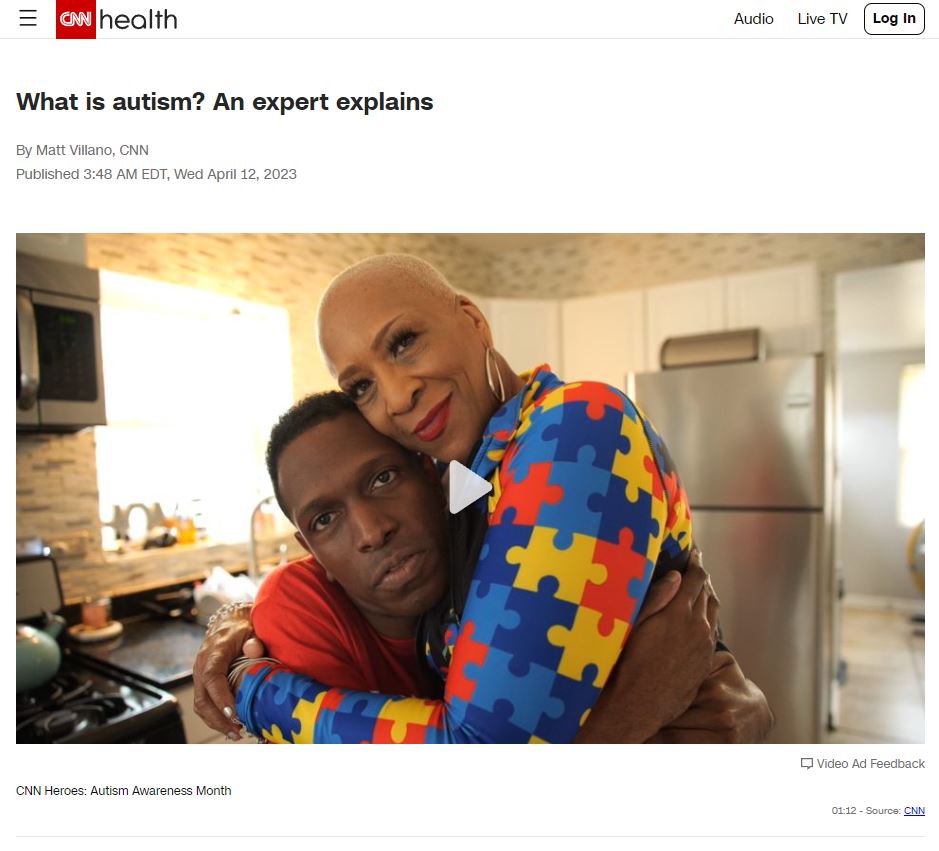
Dr. Geschwind talks with Matt Villano from CNN about what autism is and what causes it.


Dr. Geschwind and other researchers testify at a House Foreign Affairs subcommittee hearing on brain health research.

Elizabeth Ruzzo talks about our work identifying more than a dozen new autism risk genes and related research.

Dr. Daniel Geschwind explains what we can learn about autism and the brain through cutting-edge neuroscience and genetic research.

Dr. Daniel Geschwind provides an understanding of the brains of people with autism and answers questions from families about how this research is important for helping improve the lives of people across the spectrum.

Awarded to Dan Geschwind, the National Academy of Medicin's Rhoda and Bernard Sarnat International Prize in Mental Health recognizes individuals, groups, or organizations for outstanding achievement in improving mental health.

Awarded to Dan Geschwind, the Cotzias Lecture Award is the highest award bestowed by the American Academy of Neurology.

Awarded to Dan Geschwind, the Gold Medal award honors pioneering contributions to the field and significant and sustained work that advances and extends knowledge in biological psychiatry.

Awarded to Dan Geschwind, INSAR Fellows are members of the International Society for Autism Research whose autism research has made a significant international impact on the scientific understanding of autism spectrum disorder (ASD), clinical practice, educational methods, and/or policy.

Awarded to Dan Geschwind and Michael Jung, Amgen's Early Innovator Award supports the translation of promising academic research into technologies that benefit patients.

Awarded to Dan Geschwind, the Raymond D. Adams Lectureship was established in 2000 to honor Dr. Raymond D. Adams, emeritus Bullard Professor of Neuropathology at Harvard Medical School and emeritus Chief of Neurology Service at the Massachusetts General Hospital.

Awarded to Dan Geschwind, BBRF Distinguished Investigator Grants fund talented, established scientists with a record of outstanding research accomplishments.

Awarded to Dan Geschwind, the Allen Distinguished Investigator program supports early-stage research with the potential to reinvent entire fields

The AAP is an honorific, elected society of America’s leading physician-scientists who exemplify the pinnacle of pioneering and enduring, impactful contributions to improve health. Dan Geschwind was elected to the society in 2014.

Awarded to Dan Geschwind, the Brain and Behavior Research Foundation's Ruane Prize is awarded to one researcher every year to recognize achievements in understanding early-onset brain and behavior disorders.

The NAM works to improve health for all by advancing science, accelerating health equity, and providing independent, authoritative, and trusted advice nationally and globally. Dan Geschwind was elected to the NAM in 2011.















The Kavli Institute for Brain and Mind's (KIBM) mission is to support research that furthers our understanding of the origins, evolution and mechanisms of human cognition. Dan Geschwind gave two talks while at KIBM.


Awarded to Dan Geschwind, the NIH MERIT Award provides stable, long-term funding support to outstanding, experienced investigators whose productivity is distinctly superior and who are deemed highly likely to continue to perform their research activities in an outstanding manner.
Awarded to Dan Geschwind, the Derek Denny-Brown Young Neurological Scholar Award honors neurologists and neuroscientists in the first 12 years of their career who have made outstanding basic or clinical scientific advances toward the prevention, diagnosis, treatment, and cure of neurological diseases.


Awarded to Dan Geschwind, the James S. McDonnell Foundation's Award in Cognitive Neuroscience is a legacy program that awarded grants from 1990 to 2000.